Entradas

Mostrando las entradas etiquetadas como Mexican Colonial Art

Colonial Art in the Lake Pátzcuaro Area

Imagen
Pátzcuaro and the Lake Region , have great artistic wealth. From the time of evangelization in the 16th century when the Franciscan monks arrived, numerous temples and monasteries were built in various communities in the region. Colonial Art at Templo de la Soledad in Tzintzuntzan, Michoacán Learn more about the unique colonial art around Lake Pátzcuaro . What began as a clash between the Spanish evangelists and Purépecha (indigenous) cultures , ended up in a cultural syncretism. Among their tasks, the evangelizers taught arts and crafts to the indigenous. The Spaniards created many painting in temples, which became a way of connecting with the indigenous on a daily basis. San Nicholas Church in Santa Fe de la Laguna at Lake Pátzcuaro Region Sculptures were also used in our region, but using a technique using corn cane paste that the Purépechas used to fashion images of their gods. This technique amazed the evangelists for its lightness, and they exported muc...

Religious Figures of Corn Pulp

Imagen
Religious figures of corn pulp are an important legacy of the Pátzcuaro Lake region indigenous people (Purépechas) , partly because this technique, which was developed by the prehispanic Purépechas , was unique in the entire world.    Museums around the world prize these figures among their collections. For our guests at Hotel Mansion Iturbe who love art and culture, visiting our temples where these extraordinary religious sculptures are located is a memorable experience. Señor de la Tercera Orden in Pátzcuaro during the Easter Season These figures were created during the 16 th , 17 th , and 18 th   centuries, mainly in Pátzcuaro and Tzintzuntzan . The Spanish evangelists were fascinated by this unknown technique and many of the figures were taken back to Spain, where they were widely recognized for their level of detail, as well as the astonishing lightness of the material. Religious Figure of Corn Purp in Tocuaro, Michoacán There was an artistic ...

Understand More about Pátzcuaro through our Monuments

Imagen
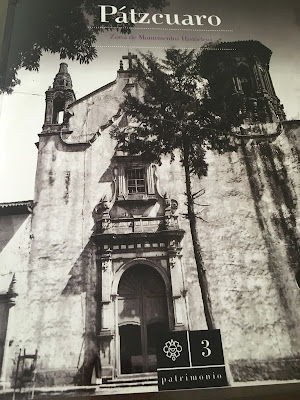
An excellent book about Pátzcuaro is just out: Pátzcuaro – Zona de Monumentos Históricos (Pátzcuaro – Place of Historical Monuments). It’s actually the third in a series, edited by the Instituto Nacional de Antropología e Historia (INAH) (National Institute of Anthropology and History), under the direction of Julieta García.  With the guidance of INAH, we can be assured that the information contained in the book is trustworthy and accurate. Pátzcuaro Zona de Monumentos Historicos a book made by the INAH This book uses monuments of our Pueblo Mágico as an interesting point of view for those who want know more about Pátzcuaro. If you want to understand and enjoy Pátzcuaro to the fullest, we highly recommend this important work, which outlines pre-Hispanic history, religious architecture, colonial homes, the lovely plazas of the city, and much more. For more information on this book, go to : http://www.inah.gob.mx/es/boletines/439-el-libro-patzcuaro-zona-de-monum...

J’ATZINGUENI, or Corn Stalk Paste, and its origins in the Pátzcuaro Lake Region

Imagen
            Centuries ago, corn was – and continues to be today – the main food staple of Mexico .  But the Purépechas found a surprising, secondary use for this otherwise innocent plant:  They used it, combining it with various other local “ingredients,” in creating figures.  The Purépechas called the resulting substance “J’ATZINGUENI” – a legacy of the Purépechas to the world.  The Spanish themselves came to appreciate this “new” artistic medium. It was a custom of the mesoamericans to carry images of their gods into war; they believed the presence of the heavy and bulky figures would increase their chances of success on the battlefield.  Typically, it was the principal god who accompanied them to infuse the warriors with valor and courage.  Furthermore, they also believed that if they were defeated and the figures ended up in the hands of the victorious, the idols would wreak revenge upon them e...